Vertical access
Vertical access
Tactical Vertical Access – Overview
Tactical vertical access refers to the methods and techniques used by military and law enforcement units to move vertically—either ascending or descending—during operations. This includes accessing buildings, cliffs, ships, or other structures where traditional entry routes are not viable or would compromise the mission.
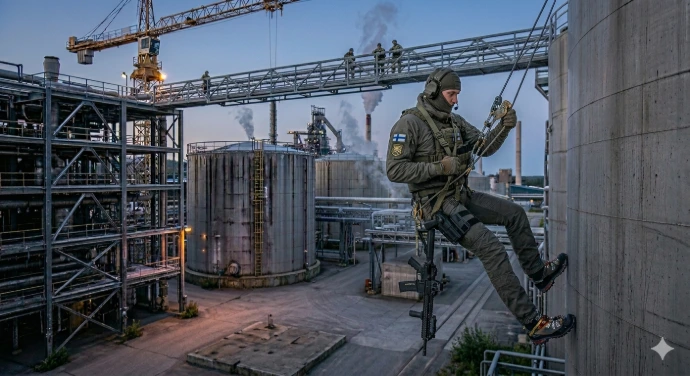
A core aspect of tactical vertical access is rope-based movement. Techniques such as rappelling (abseiling), fast-roping, and climbing allow units to insert into or extract from elevated or hard-to-reach positions. For example, fast-roping is commonly used from helicopters to deploy troops quickly onto rooftops or confined urban areas, while rappelling provides more controlled descent when precision is required.
Equipment plays a critical role in ensuring both safety and effectiveness. Operators use harnesses, helmets, carabiners, descenders, ascenders, and specialized ropes designed for high loads and durability. In tactical contexts, gear is often optimized for speed, noise reduction, and minimal bulk, allowing personnel to move efficiently without compromising stealth.
From a tactical standpoint, vertical access provides a significant advantage by enabling forces to bypass fortified entry points such as doors or gates. Approaching from above or along vertical surfaces can create surprise, disrupt enemy expectations, and allow access to otherwise secured areas. This is especially valuable in urban operations, maritime boarding, and mountainous terrain.
Training is essential, as vertical movement under operational conditions requires coordination, physical strength, and confidence. Operators must be able to perform these techniques in low visibility, under stress, and sometimes while carrying heavy equipment or weapons.
Overall, tactical vertical access expands operational flexibility by adding a third dimension to maneuver, allowing units to operate in complex environments where control of elevation can determine mission success.